

Amazon Music Vs Spotify a Head-to-Head Comparison
When you get down to it, the best choice in the Amazon Music vs. Spotify debate really boils down to what you care about most. If your top priority is squeezing every last drop of detail out of your music with pristine, high-resolution audio, then Amazon Music is your huckleberry. But, if you live for unparalleled music discovery, social sharing, and perfectly curated playlists, Spotify still wears the crown.
Which Music Streamer Wins the Ultimate Showdown?
Picking between Amazon Music and Spotify is less about which one is "better" and more about which one fits your listening habits. Each service has staked its claim in the packed streaming world, playing to different strengths to win over different kinds of listeners.
Amazon Music’s big play is audio fidelity. By bundling high-resolution, lossless audio into its standard Unlimited plan at no extra cost, it’s making a direct appeal to audiophiles and anyone who simply wants their music to sound as good as possible. Spotify, on the other hand, built its massive user base on the back of its brilliant algorithms and deep community features.
This core difference really sets the stage for the entire comparison. It’s no surprise that Spotify commands a colossal 246 million premium subscribers worldwide, holding a dominant 37% market share. That figure absolutely dwarfs Amazon Music's, proving just how powerful Spotify's freemium model and addictively smart playlists are at keeping people hooked.
The decision really comes down to this: Do you care more about the technical quality of the audio file or the intelligence of the platform serving it up? Your answer almost always points to the right service.
To make things even clearer, let's break down the key differences at a glance.
Quick Look: Amazon Music vs. Spotify
Here’s a simple table to show you where each service shines.
| Feature | Amazon Music | Spotify |
|---|---|---|
| Best For | Audiophiles, Prime members, Alexa users | Music discovery, playlist lovers, social users |
| Audio Quality | Up to 24-bit/192kHz (Ultra HD) | Up to 320kbps (Ogg Vorbis) |
| Music Library | 100+ million songs | 100+ million songs |
| Podcasts | Good selection | Massive library with exclusive shows |
| Pricing (Individual) | $9.99/mo (Prime) or $10.99/mo | $10.99/month |
While this table gives you the highlights, the devil is in the details of how these features actually shape your day-to-day listening. For a look at how another major player stacks up, this Pandora vs Spotify A Head-to-Head Music Streaming Showdown offers some great insights.
Now, let's dig deeper into each category to help you make the final call.
Audio Quality and Library Depth Analysis
When you line up Amazon Music and Spotify, the first thing people talk about is the song count. But with both services boasting libraries of over 100 million tracks, that's no longer the real story. For most of us, finding the latest hit or a classic album isn’t a problem on either platform.
The real conversation starter—and the most significant difference between the two—isn't about what you can listen to, but how good it sounds. This is where Amazon Music has confidently planted its flag.
The Clear Winner in Sound Fidelity
Amazon Music Unlimited decided to make high-resolution audio a standard part of its subscription, and that single move completely changes the game for anyone with a decent sound system. They don't just offer it; they give you two tiers of incredible quality at no extra cost.
- HD (High Definition): Think of this as pure, CD-quality sound. It’s lossless audio streamed at 16-bit depth and 44.1 kHz, meaning you hear the music exactly as the artist recorded it, with none of the data stripped away like in standard MP3s.
- Ultra HD (Ultra High Definition): This is where audiophiles really start paying attention. At up to 24-bit depth and a 192 kHz sample rate, this is “better-than-CD-quality” audio that delivers a level of detail and clarity that compressed formats just can't touch.
Spotify, on the other hand, tops out at 320kbps using the Ogg Vorbis format. Now, let’s be clear: this is high-quality for a compressed, or "lossy," file. It's perfectly fine for listening in the car, on a run with standard earbuds, or through your laptop speakers. But the key word is "lossy"—to keep file sizes small, some audio information is permanently removed.
For anyone who truly listens, the difference is night and day. Amazon Music's Ultra HD is like looking through a perfectly clean pane of glass, where every tiny vocal inflection and subtle instrument is crystal clear. Spotify's 320kbps stream is like looking through a very clean window—it's still a great view, but you lose those finest details around the edges.
Does High-Resolution Audio Really Matter to You?
Here's the honest answer: it depends entirely on your gear. If you’re plugging in a nice pair of wired headphones, using a dedicated DAC (Digital-to-Analog Converter), and running it through a quality amplifier, you will absolutely hear the difference. The sound feels wider, the instruments have more breathing room, and the music just comes alive.
But if your listening happens mostly over Bluetooth, the advantage of lossless audio pretty much disappears. Most Bluetooth technology has to compress the audio again before it gets to your ears, which cancels out the benefits of that high-resolution source file. In that everyday scenario, Spotify’s 320kbps stream is more than good enough.
Catalog Depth and Podcast Ecosystems
Beyond the big numbers, there's the question of catalog depth—the niche genres, B-sides, obscure remixes, and international tracks. Both platforms do a great job, but Spotify's head start has given it a slight edge in deep cuts and user-generated playlists, making it a goldmine for anyone who loves to dig for hidden gems.
When it comes to podcasts, however, the contest isn't even close. While Amazon Music has a respectable podcast library, Spotify has poured immense resources into becoming the king of spoken-word content. It has a bigger library and, crucially, an ever-expanding lineup of exclusive shows from major networks and creators that you won't find anywhere else.
For anyone who splits their time evenly between music and podcasts, Spotify is the undeniable front-runner. This content strategy has helped it build a massive global footprint, with Spotify commanding 31.7-37% of the streaming market compared to Amazon Music's 11.1%. If you want to learn more about the market dynamics behind these numbers, you can find great insights at pianodreamers.com. Ultimately, this makes Spotify the go-to choice for users who want a single app for all their audio needs.
How Do They Stack Up on Music Discovery and Personalization?
Great audio quality is one thing, but what really makes a streaming service feel like yours is how well it knows you. This is where the rubber meets the road in the Amazon Music vs Spotify showdown. We're moving beyond tech specs and into the personal experience of finding your next favorite song.
Spotify basically built its kingdom on this one idea. Its recommendation algorithm is legendary for a reason—it’s a finely-tuned engine that learns your tastes with almost spooky accuracy. It’s what makes millions of users swear the service just “gets” them.
This magic is delivered through a few core, AI-driven playlists that have become household names for music lovers.
- Discover Weekly: Your Monday morning treat. This is a playlist of 30 songs custom-picked for you based on what you’ve been spinning. It’s famous for unearthing absolute gems you’d never find otherwise.
- Release Radar: The Friday drop. This playlist pulls together all the brand-new music from artists you already follow or listen to, so you never miss a new single or album.
- Daily Mixes: These are your go-to vibe-setters. You get several playlists based on different genres or moods, mixing in songs you love with new stuff that fits right in.
Together, these create an effortless discovery loop that keeps your library feeling fresh without you having to do any work.
Amazon Music’s Catch-Up Game
Amazon Music has been working hard to catch up here, and it shows. What used to be a fairly static, catalog-first service is now actively trying to learn your habits and guide you to new tunes.
Its primary discovery tools are curated stations and personalized playlists, often built around specific moods, genres, or artists. More recently, Amazon rolled out its own AI DJ called "Maestro," which lets you create playlists on the fly just by typing a prompt, jumping on the conversational AI trend.
Still, Amazon’s recommendations can sometimes feel a bit… obvious. They tend to stick close to popular hits and direct artist similarities, whereas Spotify’s algorithm dives into a much deeper, more complex web of user behavior and musical influences.
If Spotify is like a seasoned DJ who's known you for years, Amazon Music is more like a very knowledgeable record store clerk—they’ll give you solid recommendations, but they can be a little predictable.
The Social Experience: Where Spotify Runs Away With It
Here’s where the two services really diverge. Music is meant to be shared, and Spotify leans into that idea hard, creating a sense of community that Amazon Music simply doesn't offer.
Spotify is packed with social features that make listening a shared activity:
- Collaborative Playlists: You and your friends can add, remove, and reorder songs on a shared playlist in real-time. It's a game-changer for road trips, parties, or just building a perfect mix together.
- Friend Activity Feed: On the desktop app, there’s a sidebar that shows you exactly what your friends are listening to right now. This is an amazing, passive way to find new music through people you actually know.
- Blend: This clever feature mashes up your music taste with a friend's, creating a unique playlist for both of you. It even gives you a "taste match" score to see how similar your listening habits are.
These tools turn music from a solo hobby into a connected experience. Amazon Music, on the other hand, operates almost purely as a personal utility. If you love sharing music and discovering new artists through your friends, Spotify is really the only contender here.
4. Device Compatibility and Ecosystem Integration

Let's be real—a music service is only as good as its ability to play where you want, when you want. The Amazon Music vs Spotify debate isn't just about your phone; it’s about your smart home, your car, and even your gaming console.
This is where the two services really show their different philosophies. Amazon Music leverages its own massive hardware universe for a deeply integrated experience. Spotify, on the other hand, has spent years building a vast, open network that works with just about everything else.
Amazon Music: The Smart Home Default
If you're living in an Alexa-powered home, the choice is practically made for you. Amazon Music is designed from the ground up to be the default audio source for the entire Echo ecosystem, and the connection is incredibly seamless.
You can ask Alexa for a specific song, artist, or mood, and it just works. Every time. For anyone invested in Echo speakers, Fire TV devices, or other Alexa-enabled gadgets, Amazon Music feels less like a separate app and more like a core feature of their smart home.
This tight-knit integration is Amazon's trump card. For a family with Echo Dots in multiple rooms, telling Alexa to "play pop music everywhere" creates an instant, no-fuss multi-room audio experience. That kind of out-of-the-box simplicity is tough to beat if you're all-in on Amazon.
The core difference is simple: Amazon Music is the native language of its own ecosystem. Spotify, on the other hand, is a universal translator, fluent in the language of hundreds of different third-party devices.
Spotify: The Universal Connector
While Amazon built a walled garden, Spotify was busy building bridges. Its killer feature in this arena is Spotify Connect, a brilliant piece of tech that turns your phone into a universal remote for a staggering number of speakers, TVs, consoles, and cars.
Spotify Connect works with devices from hundreds of brands, including:
- Smart Speakers: Sonos, Google Nest, Bose, and many more.
- Gaming Consoles: PlayStation and Xbox have deep Spotify integration, perfect for gaming soundtracks.
- Smart TVs: Native apps are available on most Samsung, LG, Sony, and Android TVs.
- Automotive Systems: Many new cars feature Spotify built right into the dashboard.
This "play everywhere" approach makes Spotify the far more flexible option if your gadgets come from a mix of different companies. You could start a podcast on your phone during your commute, instantly hand it off to your Sonos speaker at home, and then switch to your PlayStation for a gaming session without missing a beat. Amazon Music just can't match that level of continuity across unrelated devices.
For anyone running a Google-powered smart home, Spotify is often the smoother choice. If you want to get that set up, you can check out our guide on how to link Spotify to Google Home.
Ultimately, your choice here really depends on your tech. If you're an Alexa loyalist, Amazon Music offers an unbeatable plug-and-play experience. But if you value flexibility and want your music to work flawlessly across a wide variety of brands, Spotify’s near-universal compatibility gives it a powerful, undeniable edge.
Comparing Pricing Plans and Overall Value
When you're trying to pick between Amazon Music and Spotify, the price is obviously a huge factor. But the real value isn't just about the monthly bill. Both services have similar plans on the surface, but a few key differences in how they price things can make one a much smarter choice for you.
At first glance, Spotify and Amazon Music look identical. They both offer the usual Individual, Duo, Family, and Student plans, and the prices are almost the same. An Individual Premium plan on either platform will run you about $10.99 a month. But that's where the similarities end, and the real value calculation begins.
The Amazon Prime Advantage
Amazon’s biggest trump card is its deep integration with Prime. If you're one of the 200+ million people already subscribed to Amazon Prime, the math changes completely in favor of Amazon Music.
Prime members get a nice discount on Amazon Music Unlimited, knocking the individual plan down to just $9.99 per month. Even better, a Prime membership automatically includes Amazon Music Prime at no extra charge. This gives you access to a massive 100 million song library, though you have to listen on shuffle. For anyone who just wants some background music, this perk might be good enough to skip a paid subscription entirely.
For existing Prime members, Amazon Music Unlimited isn't just another streaming service—it's a discounted upgrade that comes with a pretty great free tier already built-in. Spotify, as a standalone product, just can't compete with that kind of bundled value.
Assessing True Value Beyond the Monthly Fee
While Amazon clearly wins if you're a Prime user looking for a deal, Spotify makes a strong case for its price with a far superior user experience. There's a reason Spotify is on track to hit 281 million premium subscribers by Q3 2025, while Amazon sits around 80 million. People are willing to pay for its world-class discovery algorithms and social sharing features. You can dive deeper into these growth trends over at FreeYourMusic.com.
So, what you choose really depends on what you care about most:
- Choose Amazon Music if: You’re a Prime member and want the cheapest path to high-quality, on-demand streaming. Getting lossless audio included at a lower price is a deal that’s hard to beat.
- Choose Spotify if: You prioritize a slick interface, the best music discovery engine out there, and strong social features. For a lot of people, that seamless experience is easily worth the standard price.
Don't forget that both services offer family plans, which can dramatically lower the cost per person. For example, you can learn more about how much a Spotify Premium Family plan costs and see how splitting it can be a game-changer. This is where tools like AccountShare come in handy, helping you securely manage a group plan so everyone gets premium features for a fraction of what they'd pay alone. It makes the financial decision a whole lot more flexible.
Making a Smart Choice with Secure Account Sharing
So, you've weighed the pros and cons—audio quality, discovery algorithms, and how each service fits with your devices. Now for the final piece of the puzzle: choosing the most cost-effective way to get the premium features you've decided you can't live without. Whether you’re leaning toward Amazon Music or Spotify, paying the full individual price is rarely the best deal.
A much savvier approach is to tap into the power of group plans through secure account sharing. This strategy gets you all the good stuff—no ads, offline downloads, and unlimited skips—for a fraction of the cost. Platforms like AccountShare are built for exactly this, transforming a standard family plan into an incredible money-saving tool.
How Secure Sharing Maximizes Your Value
The idea is straightforward. Both Spotify Family and Amazon Music Family let up to six people have their own individual accounts under a single, discounted monthly bill. The catch? Actually organizing a group, chasing everyone for their share of the payment, and making sure everyone’s privacy is respected can be a real headache. This is where a dedicated platform makes all the difference.
AccountShare steps in as a secure middleman, handling the tricky parts for you. It helps you find or create a sharing group and automates the payments, so you never have to play bill collector with your friends again. When you're trying to make a smart decision about any digital service, it pays to see how different options compare, much like you would when reading a detailed help desk software comparison. Just as you’d demand clear features and solid support from a software provider, you need a reliable system for managing your shared subscriptions.
Here’s a peek at the AccountShare interface, showing just how many different services you can share.
As you can see, the platform lays everything out clearly, making it simple to find a Spotify group and immediately start cutting your monthly costs.
What About Privacy and Security?
This is usually the first question that comes to mind. Sharing account details feels risky, and nobody wants their carefully curated playlists or guilty-pleasure listening history exposed. These are completely valid concerns, and it's something specialized platforms are designed to solve.
AccountShare keeps your account safe with a few key features:
- Secure Credential Management: The platform handles access without ever revealing the main account holder's password to the rest of the group.
- Truly Individual Profiles: Family plans on both Amazon Music and Spotify give every member their own separate account. Your playlists, recommendations, and listening habits remain completely yours.
- Full Admin Control: The person who sets up the group can manage who joins and who leaves, ensuring only people you trust are part of the plan.
Using a managed platform gives you the huge financial upside of a group plan without compromising on the private, personalized experience of having your own account. It’s the best of both worlds.
This method is a game-changer for anyone on a budget who would otherwise be stuck with a free, ad-riddled plan. If you've settled on Amazon Music, learning how to share your Amazon Music account through a service like this is an easy first step to saving money right away. It shifts the "Amazon Music vs. Spotify" debate from a simple feature-for-feature battle to a truly strategic financial decision.
So, Which One Is Right for You?
After digging into everything from audio fidelity to playlist curation, the Amazon Music vs Spotify debate really boils down to what you care about most. There's no single "best" service here; the right choice depends entirely on your listening habits, your gear, and the tech you use every day.
Think about what you value in a streaming service. Is it the crisp, uncompressed sound of a high-resolution track, or is it the thrill of an algorithm that knows your taste better than you do? Both platforms are fantastic, but they shine in very different areas.
A Quick Guide for Every Listener
To help you decide, let's match the service to the listener. See which of these profiles sounds most like you.
Go with Amazon Music if...
- You're an Audiophile: This is the easiest call to make. If you've invested in a great pair of headphones or a proper sound system, Amazon's Ultra HD lossless audio is a game-changer. It delivers a richness and depth that Spotify's current offering just can't touch.
- You're Already an Amazon Prime Member: The value is hard to beat. You get a nice discount on Music Unlimited, and the included Amazon Music Prime gives you ad-free, shuffle-play access to the full catalog at no extra cost. It’s a no-brainer for Prime subscribers.
- Your Home is an Alexa Stronghold: If you're all-in on the Echo ecosystem, Amazon Music is the native language. Voice commands are seamless, and the integration with Alexa devices is flawless, making it the most frictionless choice for smart home listening.
Go with Spotify if...
- Music Discovery is Everything to You: Spotify's recommendation algorithms are still the king. If you live for finding new artists and rely on playlists like Discover Weekly to feed you fresh tracks, nothing else compares. It’s simply unparalleled at introducing you to your next favorite song.
- You're a Big Podcast Listener: For those who want their music and podcasts all in one place, Spotify is the clear winner. Its library is massive, packed with exclusives, and the user experience for spoken-word content is far more polished.
- You Love Sharing Music With Friends: Music is a social experience for you. Spotify's collaborative playlists, Friend Activity feed, and easy sharing options make it feel like a community. Amazon Music, in contrast, can feel a bit more isolated.
The choice often comes down to how you want to manage the cost: go it alone and pay full price, or team up to save money.
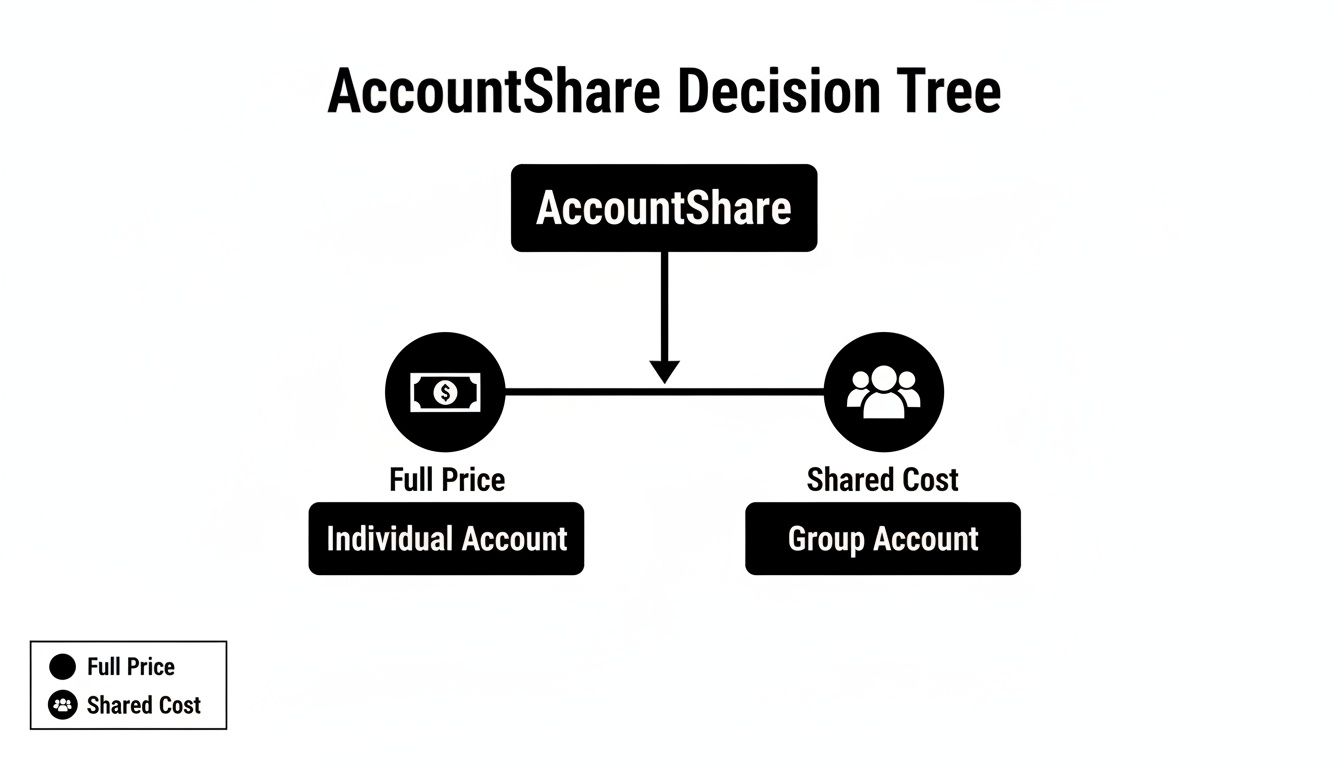
As the visual shows, a group plan is almost always the smartest financial move to unlock all the premium features without breaking the bank.
Here's a quick reference table to help you make the final call based on what you prioritize.
Which Service Is Right for You?
| Choose This If You Are... | Amazon Music | Spotify |
|---|---|---|
| An Audiophile | Yes. Included lossless and hi-res audio is unmatched. | No. Still waiting on their HiFi tier to launch. |
| An Amazon Prime Member | Yes. Great value with bundled access and discounts. | No. No special integration or pricing. |
| A Passionate Music Discoverer | Good. Algorithms are decent but not a standout feature. | Yes. The absolute best for personalized recommendations. |
| A Heavy Podcast Listener | Okay. Has podcasts, but the experience isn't as central. | Yes. The superior all-in-one app for music and podcasts. |
| Living in an Alexa Home | Yes. Flawless, native integration with Echo devices. | Good. Works well, but it's not the default service. |
| A Social Sharer | No. Lacks robust social or collaborative features. | Yes. The best platform for sharing and creating with friends. |
Ultimately, both services offer a top-tier experience. Your personal preferences for sound quality, discovery, and ecosystem integration should be your guide.
No matter which platform you land on, paying the full individual price isn't necessary. With a tool like AccountShare, you can easily and securely join a shared family plan for either Amazon Music or Spotify. This lets you cut your monthly bill way down while still getting all the premium perks.