

Tidal vs Spotify: The Ultimate Audio Streaming Showdown
So, you're trying to pick a side in the Tidal vs Spotify fight. The right choice really comes down to what matters most to you. For most people, Spotify is the easy, all-around winner thanks to its incredible music discovery, social features, and deep podcast library. But if you’re an audiophile or care deeply about artists getting a bigger slice of the pie, Tidal is your champion.
Choosing Your Ideal Streaming Service
The whole Tidal vs. Spotify debate is a classic head-to-head: sound quality versus user experience. On the surface, they look similar—both have massive music catalogs. Dig a little deeper, though, and you'll find they’re built on totally different philosophies for two distinct kinds of listeners. Getting a handle on these differences is the key to picking the service that actually fits how you listen.
This decision tree breaks down the core choice: go with Spotify for the all-in-one experience, or lean into Tidal for its superior sound.
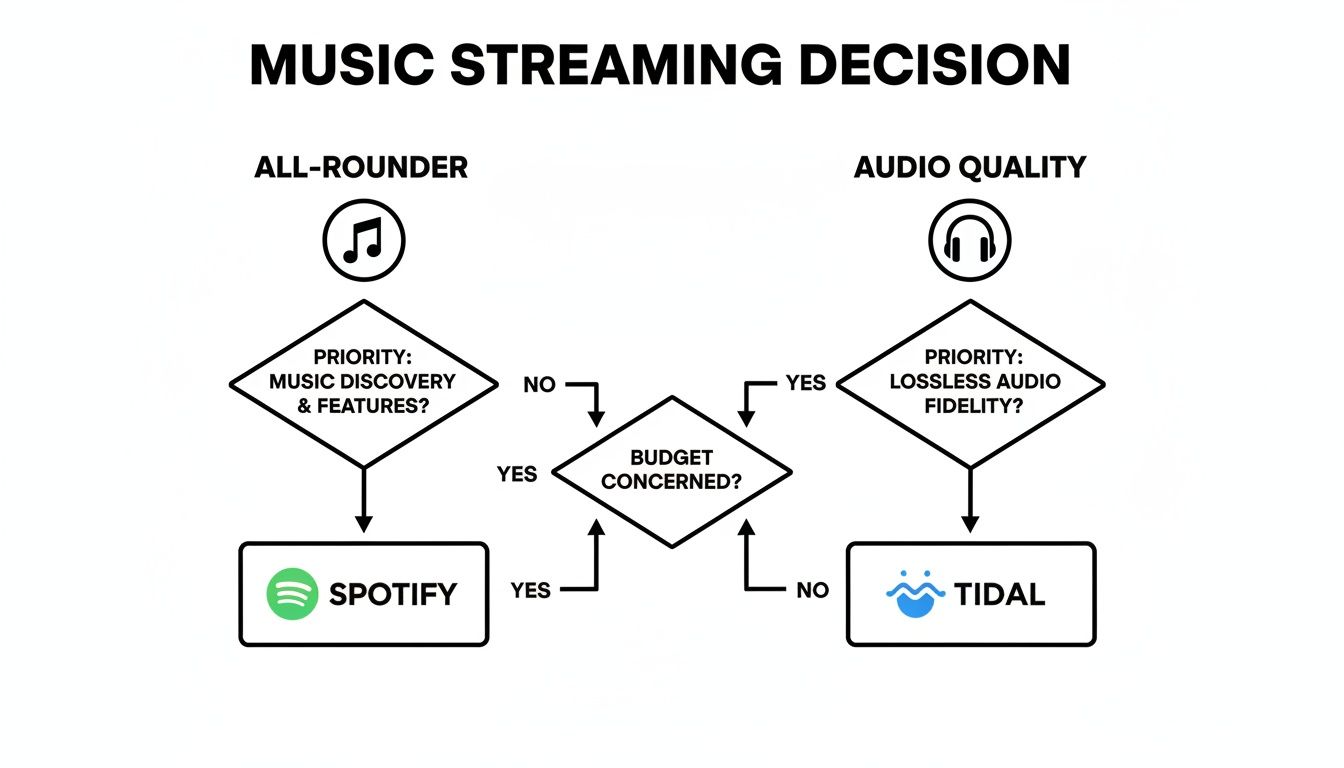
As you can see, what you value most—casual, social listening or high-fidelity audio—is the biggest factor in this decision.
Tidal vs Spotify Feature Snapshot
To get a quick feel for how these two services stack up, this table hits the highlights. It's a snapshot of the most important features to help you see the key differences at a glance.
| Feature | Tidal | Spotify |
|---|---|---|
| Best For | Audiophiles, Artist Supporters | Casual Listeners, Families |
| Max Audio Quality | 24-bit/192 kHz (Lossless) | 320 kbps (Lossy) |
| Artist Payouts | Higher per-stream rate | Lower per-stream rate |
| Podcasts & Audiobooks | Limited Selection | Extensive Library |
| Music Discovery | Human & AI Curation | World-Class Algorithm |
| Social Features | Basic Sharing | Collaborative Playlists, Friend Activity |
| Exclusive Content | Hi-Res Masters, Music Videos | Exclusive Podcasts & Live Sessions |
Ultimately, this side-by-side view makes the core trade-off clear: Tidal delivers on quality and artist support, while Spotify dominates in discovery and social integration. The best choice depends on which of these columns speaks more to your listening style.
Decoding Audio Quality: The Core Difference
The heart of the Tidal vs. Spotify debate really boils down to one thing: audio quality. This isn't just a tech-spec footnote; it's the fundamental philosophy that separates the two services. For a lot of people, this single factor is the decider.
Spotify delivers sound that's fantastic for most listeners. At its highest setting, it streams at 320 kbps (kilobits per second) in the Ogg Vorbis format. This is what we call "lossy" audio, which means some of the original sound data is stripped away to make the file smaller and easier to stream.
Tidal, on the other hand, was built from the ground up for audiophiles. It champions lossless audio, offering streams up to 24-bit/192 kHz in formats like FLAC. "Lossless" is exactly what it sounds like—none of the original data is lost, giving you the music just as the artist heard it in the studio.
So, What Does "Lossless" Actually Mean?
A great way to think about it is to compare a high-resolution photograph to a standard JPEG. That JPEG looks sharp on your phone, but zoom in or blow it up on a big screen, and you'll start to see the compression and missing details. Spotify’s 320 kbps is that high-quality JPEG—it's more than good enough for most daily listening.
Tidal's lossless files are the original RAW photograph. They hold every bit of data, which translates to greater depth, clearer details, and a much wider dynamic range in the music. To get a handle on how this works, understanding the basics of audio compression is key, as it's what dictates the trade-off between file size and sound fidelity on both platforms.
For the serious listener, Tidal's lossless audio isn't just a feature—it's the entire point. It’s about hearing music with the full emotional and technical impact of the original master recording.
Of course, whether you can actually hear this difference depends heavily on what you're listening through.
Does Your Gear Really Make a Difference?
The short answer? Yes, absolutely. The argument over whether lossless audio is worth it almost always comes down to the equipment you're using.
Let's break it down with some real-world examples:
- Standard Earbuds (like AirPods): If you're listening on your daily commute with a pair of Bluetooth earbuds, you're not going to hear the difference. The limitations of the earbuds themselves, plus all the background noise, will completely mask the subtle improvements of lossless audio.
- High-End Wired Headphones: Now, plug in a great pair of wired headphones (think Sennheiser HD 660S2 or Beyerdynamic DT 990 Pro), especially with an external DAC (Digital-to-Analog Converter), and the gap starts to show. On Tidal, you'll notice cymbals have more shimmer, basslines feel tighter and more defined, and the whole track sounds more open and spacious.
- Home Audio System: This is where Tidal truly shines. Played through a decent home stereo system, Hi-Res tracks sound incredibly dynamic and layered. You'll start to hear subtle details in the mix that are simply flattened out in a compressed stream.
If your listening habits and gear are more in line with what Spotify offers, you might find our Prime Music vs Spotify comparison helpful, as it dives into similar practical considerations for everyday listeners.
Comparing Music Libraries and Exclusive Content
Audio quality is one thing, but the music and content you can actually listen to is where the rubber meets the road. When you look at the raw numbers, Tidal and Spotify seem to be on equal footing, both boasting libraries with over 100 million tracks. So, on paper, you're not likely to miss the latest big album on either service.
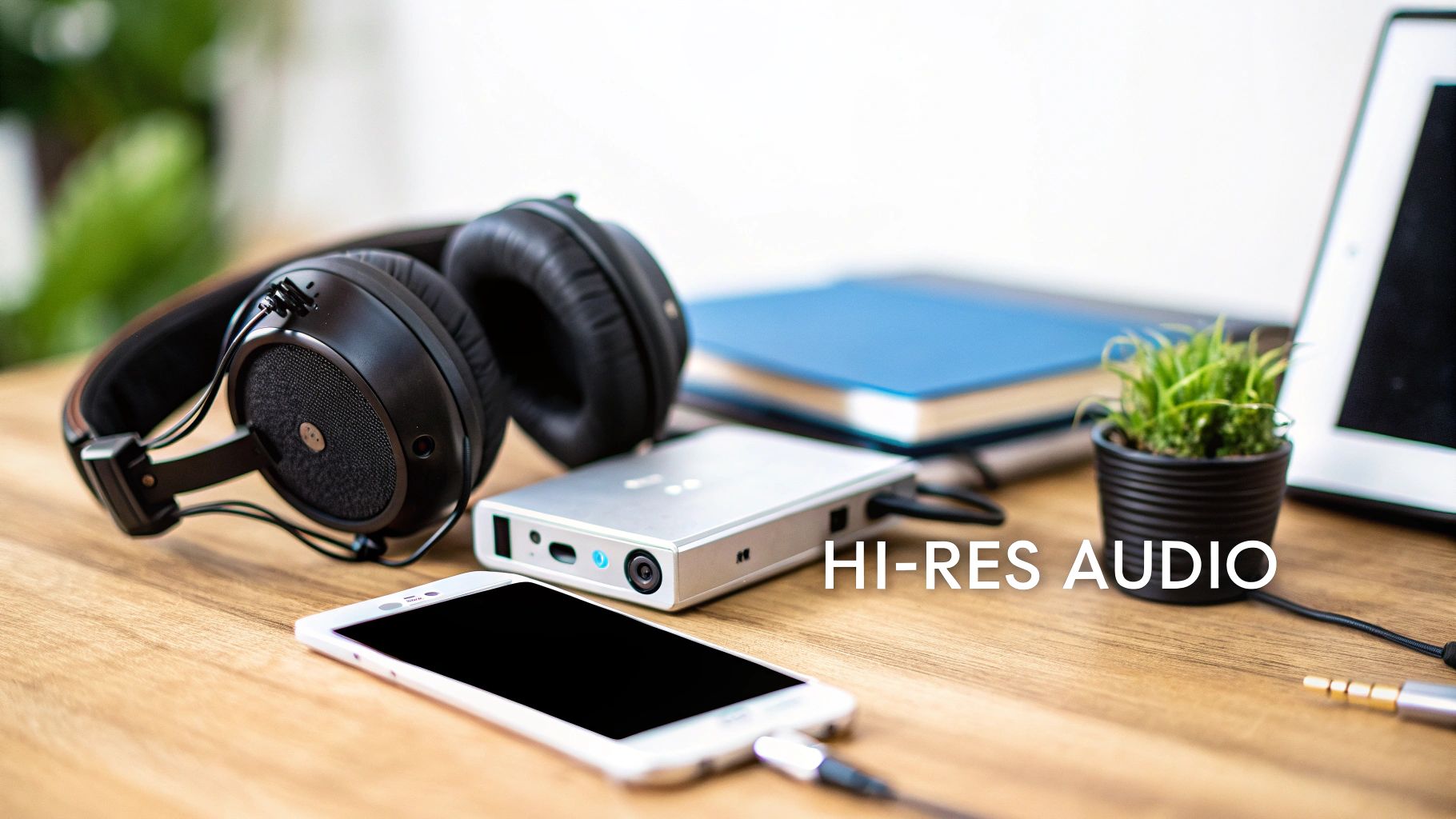
But those numbers don't tell the full story. The real difference is in their philosophies—how they curate and what they choose to prioritize beyond just the songs themselves. This is where you see their true identities emerge.
Where Tidal Focuses Its Catalog
Tidal's whole identity is built around a "music-first" approach. Its library isn't just massive; it's meticulously curated for listeners who care about sound quality.
The big draw is that a huge chunk of its catalog comes in lossless and Hi-Res formats. This is especially true of its Master Quality Authenticated (MQA) collection, which delivers audio exactly as the artist intended in the studio.
Tidal also leans heavily into exclusive content that serves the serious music fan:
- Exclusive Album Releases: In the past, this was a major play. Think about when artists like Jay-Z or Beyoncé dropped albums on Tidal first.
- High-Definition Music Videos: With over 650,000 HD music videos baked right into the app, it's a feature that Spotify just doesn't compete with.
- Artist-Curated Content: You'll discover exclusive documentaries, interviews, and playlists from the artists themselves, adding a layer of context you don't get elsewhere.
Using Tidal feels less like a utility and more like stepping into a high-end record shop, where the quality of the recording and the story behind the music are just as important as the track itself.
Spotify’s Broader Audio Empire
Spotify's game is completely different. It's aiming to be the one-stop shop for all audio, not just music. While its song catalog is just as vast as Tidal's, its real strategic advantage is its enormous investment in podcasts.
By spending billions to acquire podcasting studios and sign exclusive deals with huge names, Spotify has become the king of the podcasting world. It offers over 5 million titles, many of which are exclusive to the platform.
Spotify is building an all-encompassing audio empire, while Tidal doubles down on its music-first identity, championing artists and pristine sound.
This distinction is probably the most important one to consider. If your daily listening is a mix of music, news briefings, comedy podcasts, and deep-dive interviews, Spotify gives you all of that in one integrated app. Tidal does have podcasts, but the selection is an afterthought, not a core feature. Your choice really boils down to whether you want a specialized, high-quality music service or a comprehensive hub for everything you listen to.
Algorithmic Discovery vs. Human Curation
How you find your next favorite song is a huge part of the streaming experience, and this is where Tidal and Spotify really show their different personalities. One feels like a recommendation from a data-savvy robot who knows you inside and out, while the other is more like getting a tip from a friend who’s a music critic.
Spotify has built its empire on a world-class algorithmic discovery engine. Playlists like Discover Weekly and Release Radar have become legendary for their almost spooky ability to serve up tracks you'll love. The platform is constantly watching—your listening history, the songs you skip, the playlists you build—and uses all that data to create a personalized experience that gets smarter the more you use it.
This data-first model is incredibly powerful. Spotify is fantastic at leading you down new musical paths you might never have explored on your own, creating a seamless soundtrack that just fits.
Tidal's Human-Touch Approach
Tidal takes a different route, leaning heavily on an editorial, human-first model. It’s not that they don't use algorithms at all, but their real strength is in the massive library of playlists and content put together by actual people—music journalists, industry experts, and even the artists themselves. This creates a totally different kind of discovery, one built on context and storytelling.
On Tidal, you might stumble upon a playlist curated by an artist you love, walking you through the influences for their new album. Or you could find a deep dive into a niche genre, handpicked by a critic who lives and breathes that sound. It's an approach that clicks with music fans who want expert guidance and are curious about the "why" behind the music.
The choice here is fundamental: Do you prefer a service that knows what you like based on your behavior, or one that suggests what you might like based on human expertise and passion?
Financial Stability and Platform Investment
Underpinning these features is the financial health of the company behind the service. Spotify's strong market position means it can consistently invest in its platform, pushing out regular updates and ensuring the service stays reliable—a big deal, especially if you're managing a shared family or group plan. Its ability to fund high-quality audio, AI-powered playlists, and exclusive content comes directly from its financial resources, making it a dependable long-term choice. You can dig deeper into Spotify's market performance and financial insights on appinventiv.com.
At the end of the day, Spotify’s algorithm is tough to beat for passive, effortless discovery. It’s perfect if you just want a never-ending, personalized soundtrack for your life. Tidal, on the other hand, is built for a more active listener—someone who enjoys the hunt and values the kind of rich, editorial context that only a human can provide. Your preference here will be a huge factor in which platform feels like home.
Evaluating Pricing Plans and Subscription Value
When you stack Tidal against Spotify, looking at the price tag is just the first step. The real question boils down to value—what are you actually getting for your money each month? While both services have similar tiers, the features packed into them are aimed at different kinds of listeners, creating distinct cost-benefit trade-offs.
Spotify lays out its options with Individual, Duo, Family, and Student plans, all of which unlock its complete library and feature set. Tidal keeps it simpler with Individual, Family, and Student plans. Here's the kicker, though: Tidal now includes its fantastic lossless and Hi-Res audio across all its paid tiers. That move alone makes it a serious contender for anyone who cares about sound quality.
Comparing Individual and Student Plans
For a solo listener, the decision is pretty clear-cut. A standard Spotify Premium plan runs $10.99/month. Tidal's individual plan usually matches that price, sometimes even coming in a dollar cheaper. Since Tidal throws in lossless audio at that price point, it’s a no-brainer from a pure audio-for-your-dollar perspective if fidelity is your main goal.
Students get a great deal on either platform. Both the Spotify Student and Tidal Student plans are just $5.99/month. Spotify really sweetens the pot by bundling in a Hulu (With Ads) subscription, which is a huge bonus for students trying to consolidate their entertainment bills. On the flip side, Tidal’s student plan sticks to its guns, delivering high-fidelity audio, making it the top pick for young audiophiles.
For the individual user, it comes down to this: if you want a massive content library that includes podcasts and a free TV subscription, Spotify has the edge. But if your main priority is getting the absolute best sound for your money, Tidal's value is unmatched at this price.
Analyzing Family Plans and Shared Accounts
This is where things get interesting, and where you can really be smart with your money. Family plans are the best way to get premium features for everyone without breaking the bank. Both services offer plans that cover up to six people living at the same address.
Spotify’s Family plan, at $16.99/month, is famously easy to manage. Everyone gets their own private account, so your recommendations and playlists stay yours. It also comes with Spotify Kids, a separate app filled with child-friendly music and stories, making it a fantastic all-in-one package for a busy household.
Tidal’s Family HiFi plan also costs $16.99/month and provides six separate accounts. The standout feature here is that every single person on the plan gets full access to Tidal’s massive lossless and Hi-Res audio library. For a family of music lovers or even a group of audiophile friends, this is an incredible deal. It brings the per-person cost for premium sound down to less than $3/month. You can dive deeper into how these plans are structured in our guide on the Spotify Premium Family plan cost.
Monthly Subscription Cost Breakdown
To make it simple, let's lay out the typical monthly costs side-by-side.
| Plan Type | Tidal Cost (USD) | Spotify Cost (USD) | Key Features |
|---|---|---|---|
| Individual | $10.99 | $10.99 | Full library access for one person. |
| Family | $16.99 | $16.99 | Up to 6 accounts. Tidal includes lossless audio for all; Spotify includes the Spotify Kids app. |
| Student | $5.99 | $5.99 | Discounted rate for one. Spotify bundles a Hulu subscription. |
Ultimately, sharing a plan is the most cost-effective way to go. If your family has diverse tastes and needs podcasts and kid-friendly content, Spotify’s package is more complete. But if your group is all about getting the best audio quality possible, the Tidal Family plan offers phenomenal value that’s simply unbeatable in the high-fidelity streaming space.
User Experience and Platform Integration
Beyond the specs of audio files and the size of music catalogs, what really matters is how a streaming app feels to use every day. When you put Tidal and Spotify head-to-head, you find two polished, well-designed apps that are clearly built for different kinds of listeners.
Spotify's interface is all about speed and simplicity. It's bright, clean, and gets you to your music, playlists, and podcasts with zero fuss. That iconic green-and-black design is instantly recognizable and feels second nature to navigate, which is a big reason why it's so popular.
Tidal, on the other hand, goes for a more refined, almost gallery-like feel. The dark, moody aesthetic puts high-resolution artist photos and album art front and center. It feels more like a premium music magazine you can interact with, prioritizing an immersive, artist-focused experience over Spotify's get-in-and-go utility.
Platform and Device Connectivity
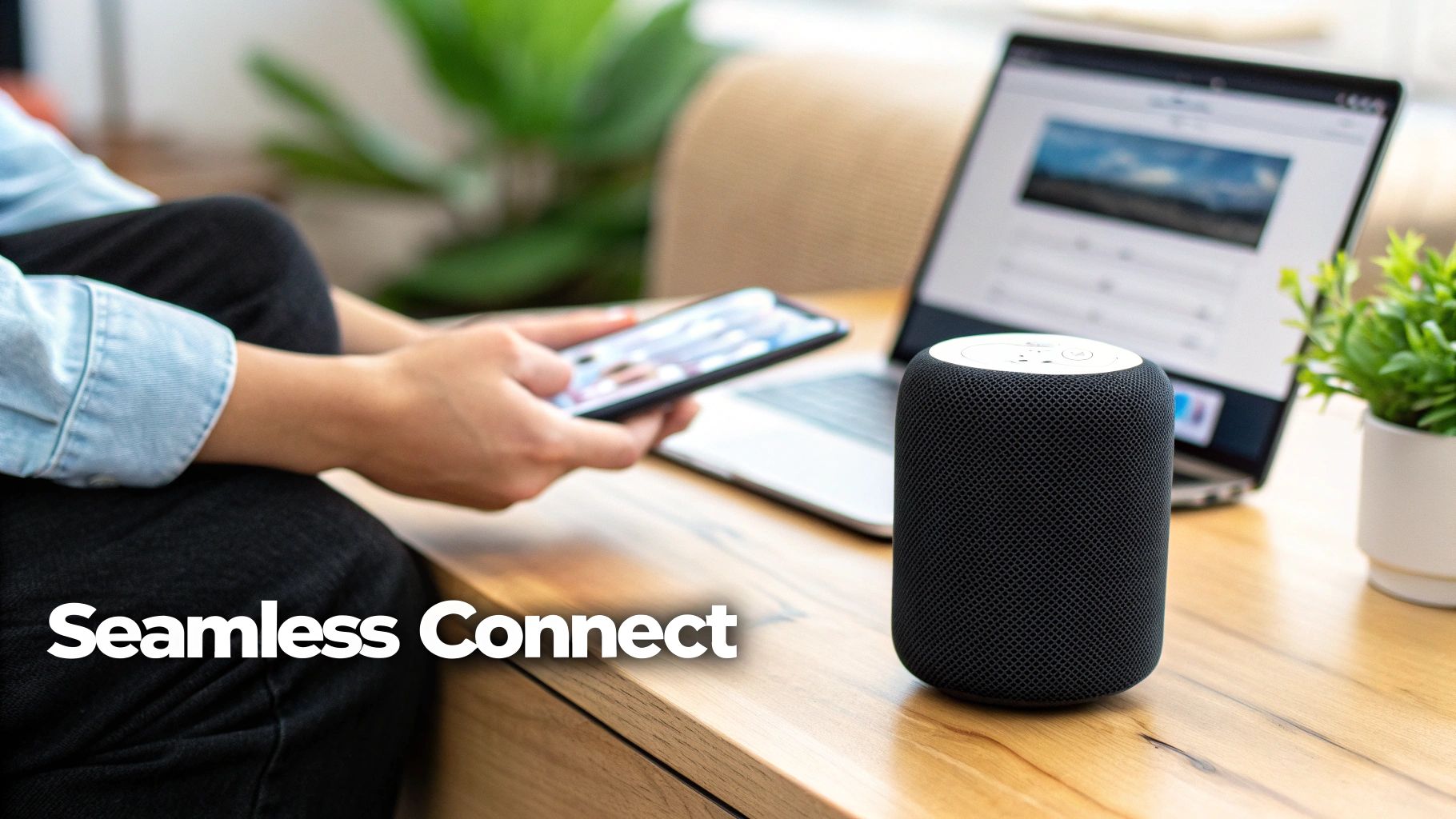
How well your music app plays with all your other gadgets is a huge deal, and this is where Spotify pulls way ahead. Its Spotify Connect feature is the gold standard for a reason. It lets you seamlessly pass music from your phone to your laptop, smart speaker, or gaming console without ever skipping a beat. To see just how slick this is, check out our guide on how to link Spotify to Google Home.
Tidal supports standard connections like Chromecast and AirPlay, which work just fine. But it lacks that deep, native integration that makes Spotify Connect feel so magical. If you have a house full of smart devices, Spotify’s network is just more cohesive and reliable.
When it comes to pure integration, Spotify's ecosystem is hard to beat. Its ability to follow you from room to room and device to device makes it feel like a core part of your connected home, not just an app.
Social Features and Community
Spotify has always understood that music is meant to be shared. It has built a strong social layer right into the app, with features like collaborative playlists for road trips with friends or the "Friend Activity" feed to see what everyone’s listening to. This sense of community is a major factor in its market dominance—as of 2025, Spotify holds a massive 31.7% of the global market share.
Artists also tap into this ecosystem through unique promotional tools, and understanding how Spotify pre-save campaigns work shows just how integrated it is with the music industry itself. Tidal's social tools are much more basic, limited to standard playlist sharing without the real-time, interactive community features that make Spotify feel so connected.
Frequently Asked Questions
When you're stuck between Tidal and Spotify, the same few questions always seem to pop up. Let's tackle them head-on to help you figure out which service really fits your life.
Can I Really Hear The Difference With Tidal HiFi Plus?
This is the big one. Honestly, if you’re listening with standard Bluetooth headphones like AirPods or just through your car speakers, you probably won't notice a significant difference between Spotify's highest quality setting and Tidal's lossless audio. It’s just not what that gear is designed for.
The magic of Tidal's HiFi plans really comes alive for serious audiophiles. If you've invested in a pair of high-end wired headphones or a premium home stereo system, that's when you'll appreciate the extra detail and clarity.
For the everyday listener, Spotify is perfectly fine. But if you have the right equipment and sound quality is non-negotiable, Tidal is the clear winner.
Which Service Is Better For Sharing With My Family?
For most families, Spotify's Family Plan is the easier, more practical choice. It gives up to six family members their own separate accounts, so everyone gets their own music, playlists, and recommendations without messing up anyone else's. Plus, it includes Spotify Kids, which is a great little bonus.
Tidal has a family plan too, and it brings that incredible high-fidelity audio to the whole group. However, Spotify’s better social features and wider device support tend to make it a smoother experience for a household with different tastes and tech.
Does Tidal Pay Artists More Than Spotify?
Yes, it does. Tidal has built its brand on an "artist-first" model, and part of that promise is a higher per-stream payout rate. If your primary goal is to put more money directly into the pockets of the artists you love, Tidal is the way to go.
That said, it's not a simple story. Spotify's user base is absolutely massive. So while the rate per stream is lower, the sheer volume means artists can still earn a substantial income from the platform.
Splitting subscription costs is a smart way to get premium features without the premium price tag. Services like AccountShare let you safely group-purchase plans for Tidal or Spotify, so everyone can enjoy the best experience for less. You can find a shared plan at https://accountshare.ai.