
How Much Does HBO Max Cost and Is It Worth It
Figuring out how much HBO Max costs really comes down to how you like to watch your shows. The price tag starts at a pretty reasonable $9.99 per month if you don't mind a few commercials. If you'd rather skip the ads, the Ad-Free plan will run you $16.99 a month. For the ultimate home theater setup, the premium Ultimate Ad-Free plan, which includes 4K streaming, is $20.99 per month.
Your Quick Guide to Current Max Pricing
Picking a streaming plan these days can feel a little overwhelming. Max keeps things fairly simple with three main tiers, each aimed at a different kind of viewer. You’ve got options for the casual watcher, the binge-watcher who hates interruptions, and the cinephile who wants the absolute best picture and sound quality.
Ultimately, your choice boils down to a few simple questions. How do you feel about ads? Do you need that crystal-clear 4K resolution? And how many people will be sharing the account? Let's break it down.
This handy flowchart can help you pinpoint the perfect plan based on what matters most to you: ads, 4K quality, or just the best bang for your buck.
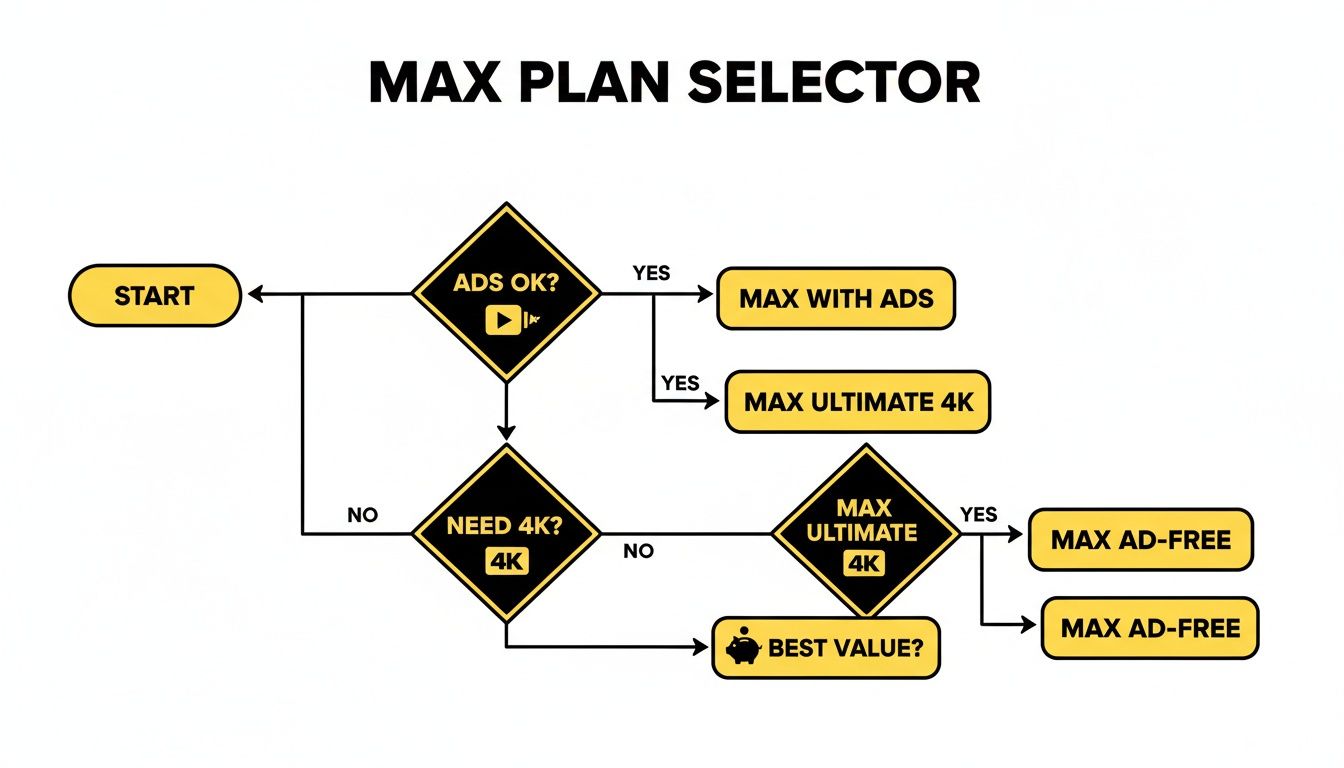
As you can see, it all starts with that one question about ads and branches out from there, making it pretty easy to see where you land.
Max Subscription Plans at a Glance
To make it even clearer, let's put all the details side-by-side. This table breaks down what you get with each plan, from price and video quality to how many people can watch at once.
| Feature | With Ads Plan | Ad-Free Plan | Ultimate Ad-Free Plan |
|---|---|---|---|
| Monthly Price | $9.99 | $16.99 | $20.99 |
| Annual Price | $99.99 | $169.99 | $209.99 |
| Video Quality | Full HD (1080p) | Full HD (1080p) | 4K UHD, Dolby Atmos |
| Simultaneous Streams | 2 Devices | 2 Devices | 4 Devices |
| Offline Downloads | Not Available | Up to 30 | Up to 100 |
This comparison really highlights the key differences and helps you quickly spot what works for you.
One of the easiest ways to shave a few bucks off the total cost is to pay for a full year upfront. If you know you're sticking with Max for the long haul, an annual plan can save you a decent chunk of change—it usually works out to getting about two months for free. If you want to dive deeper into the numbers, check out our guide on the HBO Max yearly subscription.
The "best" plan is really a personal call. If you're watching on your own and don't mind commercials, the With Ads plan is a fantastic deal. But for a family or anyone with a 4K TV who wants that immersive experience, the Ultimate Ad-Free plan is the only one that truly delivers.
If you feel like your streaming bills are creeping up, you're not wrong. The story behind Max's price changes isn't just a random hike; it’s a direct result of a hyper-competitive market and some massive shifts in the entertainment world. Once you understand the forces at play, the "why" behind the cost makes a lot more sense.
The biggest shakeup, by far, was the 2022 merger between WarnerMedia and Discovery, Inc. This wasn't just a simple business deal—it created a new media behemoth, Warner Bros. Discovery, with an absolutely gigantic library. The task of merging Discovery's massive catalog of reality TV with HBO's prestige dramas and Warner Bros.' blockbuster movies was a huge, and very expensive, project.
The Streaming Wars and the Soaring Cost of Content
This merger didn't happen in a bubble. It landed smack in the middle of the "streaming wars," an all-out battle where platforms like Netflix, Disney+, and Amazon Prime Video are spending billions every single year just to get—and keep—your attention.
Think of it as a content arms race. To land the next House of the Dragon or lock down an exclusive deal for a library of classic films, companies have to shell out astronomical sums of money. These production and licensing fees are the number one reason your subscription price goes up. To be worth the cost, Max has to constantly refresh its catalog with stuff you actually want to watch, and that all gets factored into the price you pay each month.
The relentless demand for new, exclusive shows and movies puts constant upward pressure on subscription prices everywhere. As Hollywood's production budgets climb, those costs inevitably find their way to us, the viewers.
A Quick Look at the Price Changes Over Time
Looking back at Max's pricing history really tells the story. The service has adjusted its costs several times since it first launched back in May 2020, reflecting not just inflation but strategic moves to add new features and create different tiers for every budget.
For example, the original ad-free plan started at $14.99 per month. Since then, new plans have been rolled out and old ones have been tweaked to match the expanding library and new features, like adding 4K streaming to the top-tier plan. You can see a detailed timeline of these changes to get the full picture, but this pattern is pretty standard across the streaming industry.
At the end of the day, the price of Max is a balancing act. It has to be high enough to cover the staggering cost of making and buying top-tier content, but low enough to stay competitive and convince you to stick around. As long as the streaming landscape keeps changing, you can bet the prices will, too.
How Max Pricing Compares to the Competition

When you’re weighing the cost of Max, you’re not just looking at a number on a screen. You're asking a bigger question: "Is this the best place for my entertainment budget?" That means putting Max side-by-side with the other heavyweights in the streaming world to see who really delivers the goods for the price.
The streaming arena is more crowded than ever. You've got Netflix, Disney+, Hulu, and others all fighting for your attention, each with its own unique library and pricing. Max’s ace in the hole has always been its prestige content—think HBO's powerhouse dramas like House of the Dragon and major Warner Bros. movie releases.
This top-shelf library usually means a price tag to match, positioning Max as a premium choice, much like Netflix's higher-end plans. On the other hand, services like Disney+ often hook families with a totally different content library and attractive bundles that offer a different kind of value.
A Head-to-Head Comparison
To get a real sense of where Max stands, let’s cut through the marketing noise and compare the core ad-free monthly plans from the biggest players. This is where you see what you’re truly paying for.
- Max (Ad-Free): Sits at $16.99/month, giving you access to that deep well of HBO series, Warner Bros. films, and a ton of Discovery content.
- Netflix (Standard Ad-Free): Usually priced around $15.49/month, famous for its enormous collection of original series and international hits.
- Hulu (No Ads): Comes in at $17.99/month, shining with its next-day network TV shows and its own lineup of acclaimed originals.
- Disney+ (Ad-Free): Typically costs $13.99/month, making it the undeniable home for all things Marvel, Star Wars, Pixar, and family-friendly entertainment.
As you can see, the main ad-free plans are all playing in the same ballpark, usually within just a few dollars of each other. That makes the content library the single most important factor. If you're stuck between the two biggest names, our detailed breakdown of HBO Max vs. Netflix can help you decide which catalog is right for you.
To make things even clearer, here's a quick look at how the services stack up against each other.
Streaming Service Cost and Feature Showdown
This table offers a snapshot of the current streaming landscape, putting the major services in a direct face-off.
| Service | Ad-Supported Price | Ad-Free Price | Key Exclusives |
|---|---|---|---|
| Max | $9.99/mo | $16.99/mo | House of the Dragon, The Last of Us, Dune |
| Netflix | $6.99/mo | $15.49/mo | Stranger Things, The Crown, Bridgerton |
| Hulu | $7.99/mo | $17.99/mo | The Handmaid's Tale, The Bear, Shōgun |
| Disney+ | $7.99/mo | $13.99/mo | The Mandalorian, Loki, Pixar Films |
This side-by-side comparison shows just how competitive the market is. While price points are similar, the exclusive content is where each service tries to win you over.
The Value Equation and Pricing Trends
At the end of the day, "best value" is completely personal. A movie buff who lives for the latest blockbusters and award-winning dramas will probably see Max's price as a steal. A family with young kids, though, would likely get far more bang for their buck from Disney+.
It’s also important to remember that these prices aren’t set in stone. Streaming services are constantly tweaking their costs based on how much new content they're making and what their competitors are doing. Looking back, there’s a clear upward trend across the industry.
For example, Max's ad-free plan went from $14.99 in 2020 to $16.99 by mid-2024—a 13.3% bump. In that same timeframe, Hulu's ad-free tier shot up by nearly 58%. These adjustments show how companies are finding their footing in a mature market. If you’re interested in the psychology behind these changes, you can explore various subscription pricing strategies to see how it all works.
Choosing a service isn't just about finding the lowest price; it's about finding the highest value for your specific tastes. The "right" service is the one whose library you'll actually use and enjoy month after month.
When you look at the price hikes, Max's increases have been relatively measured, designed to keep pace without scaring away subscribers. Bundling is another major play, with providers packaging multiple services together for a nice discount. It makes choosing a bit more complex, but it also opens up new ways to save.
Proven Ways to Reduce Your Max Subscription Cost

Okay, now that you know the standard sticker prices, let’s get to the fun part: finding ways to pay less. Knowing how much HBO Max costs is one thing, but figuring out how to shrink that number is how you master the streaming game. Thankfully, there are a few solid strategies to get all that great content for a whole lot less.
The most obvious path is to grab the discounts Max offers directly. Switching to an annual subscription is the easiest win, as it typically saves you the equivalent of two months' worth of payments compared to going month-to-month. You should also keep an eye out for seasonal deals Max might drop around big holidays or major show premieres.
The Power of Group Purchasing
Beyond the official deals, a much more effective strategy has taken off: group purchasing. Think of it as a carpool for your streaming subscriptions. Instead of one person footing the entire bill for a premium plan, a small, organized group pools their money to share one subscription—all safely and within the rules.
This isn't just about handing your password over to a few friends, which can quickly become a mess of security risks and awkward "who owes who" conversations. We're talking about platforms designed specifically to manage these groups, handling all the payments and access details for you. It's a method that turns a pricey subscription into something much more affordable.
The concept behind group purchasing is brilliantly simple: when you split the cost, you get all the premium perks like 4K streaming and extra screens for a tiny fraction of what you'd pay alone. It puts top-tier entertainment within reach for just about any budget.
This approach works wonders for the Ultimate Ad-Free plan. That $20.99 monthly price tag might make you think twice, but when you split it four ways, it becomes an absolute steal—and you don't lose a single feature.
A Smarter Way to Share
Platforms built for group purchasing add a layer of structure and security that makes sharing accounts completely hassle-free. They do away with the classic headaches, like chasing down friends for money or wondering who's using the login. The entire system is built for convenience.
Here’s why it works so well:
- Serious Cost Savings: Your personal share of the bill drops dramatically. In many cases, you can get a premium plan for less than the cost of a basic ad-supported one.
- Guaranteed Access: These services ensure you can always log in and stream. No more getting locked out because too many people are watching at once.
- Better Security: You never have to share your credit card details or personal passwords directly with anyone else in your group.
This structured approach is catching on fast. As subscription prices keep climbing, people are hunting for smarter ways to watch. In fact, recent data shows 35% of millennials have ditched a service after a price hike, which is why group purchasing models are becoming so popular. A platform like AccountShare can bring your personal HBO Max cost down to just $4-7 per month, turning an expensive luxury into an easy, sustainable choice.
It’s a method that’s become a go-to for tech-savvy viewers, families, and anyone staring down yearly subscription costs that can top $250. By adopting this collaborative model, you get the absolute best of what Max has to offer without draining your wallet. For more tips like this, check out our guide on the cheapest way to get streaming services.
Getting Signed Up (and Out) Without a Headache
Managing your streaming subscriptions shouldn't feel like a full-time job. Whether you’re ready to jump into the Max library or you've decided it's time to take a break, I'll walk you through it. The goal is to keep you in the driver's seat and avoid any surprise charges.
Signing up is the easy part, as you'd expect. It all starts at the official Max website, where you’ll land on a page showing off their latest and greatest.
This is what you'll typically see on the Max homepage—it's designed to get you right into choosing a plan.
From there, it's a straight shot: pick a plan, create an account with your email, and pop in your payment info. Just like that, you're ready to stream.
How to Sign Up for Max
You can get your Max account up and running in just a few minutes. The process is pretty much the same whether you're on a computer, your phone, or a smart TV.
- Pick Your Plan: First things first, you need to decide which subscription tier makes sense for you. Think about how much you hate ads, whether you really need 4K quality, and how many people in your house might be watching at the same time.
- Create Your Account: Next, they'll ask for your email and have you create a password. This is what you'll use to log in everywhere.
- Enter Your Payment Info: Finally, you’ll add a payment method like a credit card or PayPal to get things going.
Once the payment goes through, that’s it! You can log in and start binging on any device you own.
How to Cancel Your Max Subscription
Knowing how to cancel is just as important as knowing how to sign up. It’s easy to start a subscription, but knowing the right way to end it ensures you don’t get billed again next month.
The steps can change a little depending on how you first signed up—directly on the Max website, or through a third party like the Apple App Store, Google Play, or even your cable company.
The golden rule here is simple: you have to cancel where you subscribed. If you signed up on the Max website, you cancel there. If you subscribed through your iPhone, you'll manage the subscription in your Apple account settings.
For anyone who subscribed directly through Max, just log into your account on a web browser. Head to your Profile, click on Subscription, and you'll see the option to Cancel Your Subscription. Follow the final steps to confirm, and you're all set.
The best part? Your access doesn't just shut off. You can keep watching right up until the last day of your current billing cycle.
Understanding Hidden Costs: Taxes and Extra Fees
So, you’ve picked your plan and are ready to go. But when you check your first bank statement, you might see a charge that’s slightly higher than the price you saw on the website. Don't worry, it's not a mistake—it's just taxes.
Just like when you buy a coffee and the menu price doesn't include sales tax, streaming services have to collect them, too. Depending on your state or city, there might be a specific "streaming tax" or digital sales tax that gets added to your bill. This usually only adds a few cents or maybe a dollar, but it’s why the final cost can vary slightly from person to person.
Someone in California might pay a tiny bit more than a subscriber in Texas, even if they're on the exact same plan. It’s a small detail, but one worth knowing so you aren't caught off guard.
How Plan Changes Affect Your Bill
Another thing that can make your bill look a little funky is something called prorated billing. This only comes into play if you switch plans partway through your billing cycle. Max won't double-charge you, but it adjusts your bill to reflect the change.
Let's walk through an example. Say you're on the $16.99 Ad-Free plan. Ten days into the month, you decide to upgrade to the $20.99 Ultimate plan to watch a new movie in stunning 4K.
Here’s how Max figures out your next bill:
- You get a credit: Max will credit your account for the 20 or so days you didn't use on the cheaper Ad-Free plan.
- You get a new charge: You'll then be charged for the remaining days of the month at the new, higher Ultimate plan rate.
Your next statement will show both the credit and the new partial charge. It's a fair system that ensures you only pay for what you use, but it can make that one bill look a bit confusing at first glance.
Knowing about these potential extra costs helps you budget accurately, so there are no surprises when the bill arrives.
Your Top Questions About Max Costs, Answered
Alright, let's wrap this up by tackling some of the most common questions that pop up when people are trying to figure out the real cost of a Max subscription. These are the nitty-gritty details that often make or break a decision.
Do All Plans Come With 4K Streaming?
Nope. If you're a stickler for crystal-clear picture quality, this is a big one. 4K Ultra HD streaming, along with Dolby Atmos audio, is exclusively part of the Ultimate Ad-Free plan.
Both the "With Ads" and the regular "Ad-Free" plans top out at Full HD (1080p). So, if watching blockbusters like Dune in the highest possible fidelity is a priority, you’ll need to spring for that top-tier plan.
How Many People Can Watch Max at the Same Time?
The number of simultaneous streams you get is tied directly to the plan you choose. It breaks down pretty simply:
- With Ads Plan: You get 2 simultaneous streams.
- Ad-Free Plan: You also get 2 simultaneous streams.
- Ultimate Ad-Free Plan: This one bumps you up to 4 simultaneous streams.
For families, roommates, or anyone sharing an account, that jump to four streams with the Ultimate plan is a game-changer. It means fewer arguments over who gets to watch their show during prime time.
Think of it this way: the number of streams is a huge part of the plan's overall value. More streams mean more flexibility and less chance of seeing that dreaded "too many people are watching" message.
Can I Get Max for Free Through My TV or Phone Company?
You might be in luck. Some mobile and internet providers, most notably AT&T in the past, have offered Max as a complimentary perk with some of their premium plans. These deals come and go, so your best bet is to check directly with your current provider to see if they have any active promotions.
If you happen to have a qualifying plan, you can usually just link your provider login to Max and start watching without paying a dime directly to Warner Bros. Discovery. It’s easily one of the best ways to slash the cost if you're already paying for a service that includes it.
Ready to enjoy premium streaming without the premium price tag? AccountShare makes it easy and secure to split the cost of a Max Ultimate Ad-Free subscription. Get 4K streaming and all the best shows for a fraction of the price. Find your perfect streaming group at https://accountshare.ai.