
HBO Max vs Netflix The Definitive Streaming Guide
When you get right down to it, the HBO Max vs Netflix debate really comes down to one thing: Netflix gives you a massive, constantly shifting library perfect for endless scrolling, while Max (the new name for HBO Max) offers a hand-picked collection of premium dramas and blockbuster movies.
The best service for you hinges on a simple preference: do you want quantity and variety, or quality and critical acclaim?
The Final Verdict: A Head-to-Head Overview
Picking between these two streaming titans can feel a lot like choosing between an all-you-can-eat buffet and a carefully prepared gourmet meal. Netflix plays the volume game, making sure there's always something for everyone—from global hits and reality TV binges to stand-up comedy and a steady stream of original films. It’s a fantastic choice for families with different tastes or anyone who just needs something new to watch, right now.
On the other hand, Max is all about curated excellence. It's the only place you'll find HBO's critically acclaimed shows, new movies straight from Warner Bros. theaters, and dedicated hubs for brands like DC. If you're someone who gravitates toward award-winning television and a more cinematic feel, Max is probably your winner.
Neither one is objectively "better"—they just serve different cravings. It’s all about figuring out which one fits your entertainment style. Of course, if you can't decide, you could always explore a Netflix and HBO Max bundle to get the best of both worlds.
To make things even clearer, let's break down how they compare side-by-side.
Netflix vs Max At a Glance
This table gives you a quick snapshot of what each service brings to the table, helping you see the core differences at a glance.
| Comparison Point | Netflix | Max (Formerly HBO Max) |
|---|---|---|
| Primary Strength | Vast library, endless variety | Curated, high-quality originals |
| Best For | Binge-watchers, families | Cinephiles, prestige TV fans |
| Content Focus | Original series, documentaries | HBO series, Warner Bros. films |
| Release Schedule | Frequent, high-volume drops | Weekly series, monthly movies |
Ultimately, this comparison helps you focus on what really matters for your viewing habits.
The choice boils down to a fundamental question: Do you prefer an ocean of content where you can discover hidden gems, or a curated gallery filled with masterpieces? Answering that is the key to solving the HBO Max vs Netflix dilemma for yourself.
So, Which One Is a Better Deal? Pricing and Value Compared
When you're trying to choose between Max and Netflix, the first thing most of us look at is the price. But the monthly fee is just the beginning of the story. To really figure out which service gives you more bang for your buck, you have to dig into what you're actually getting—like picture quality, how many people can watch at once, and whether you have to sit through ads.
Both streaming giants use a tiered subscription model, so there's a plan for pretty much every budget and viewing style. The cheapest options come with ads but give you full access to their libraries. If you want to ditch the commercials, get better video quality like 4K Ultra HD, or let more family members stream at the same time, you'll need to step up to a pricier plan. This makes the whole debate less about which one is "cheaper" and more about which specific plan gives your household the best value.
This chart really cuts to the chase, comparing the two on variety, prestige, and price.
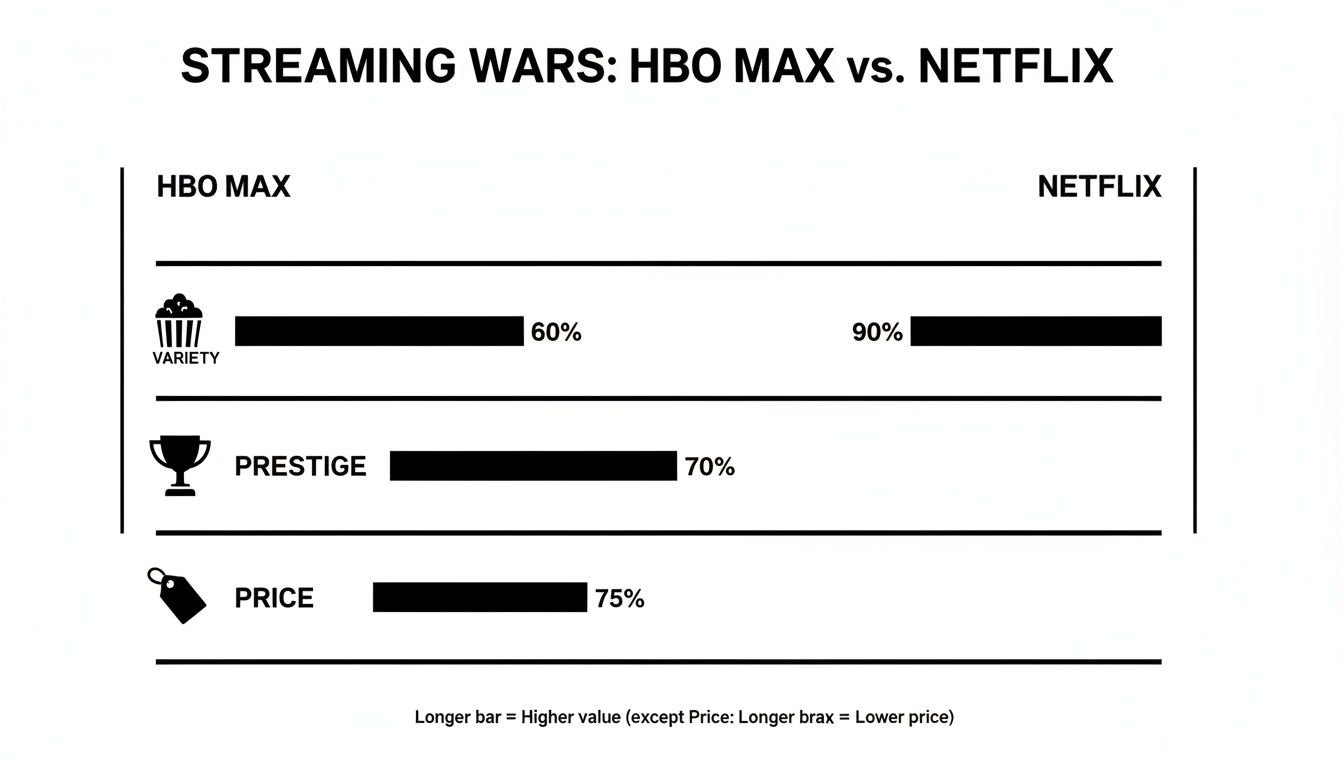
As you can see, it all comes down to what you care about most. If you want a massive, ever-changing library, Netflix has the edge in variety. If you're after critically acclaimed, "prestige" TV, Max is the clear winner. Price-wise, they're constantly fighting for your dollar.
How Ad-Supported Tiers Change the Game
The arrival of ad-supported plans has been a major shake-up for the streaming world, making top-tier content way more affordable. These aren't just throwaway options; they're a core part of the business model for both Netflix and Max. For anyone who doesn't mind a few commercial breaks, these plans are a fantastic way to save cash without losing access to the big shows and movies everyone's talking about.
And this trend is exploding. Ad-supported streaming is becoming the new normal for a lot of people. In fact, Netflix is leading the charge—by September 30, 2025, a whopping 40% of its active accounts across 20 key countries are projected to be on the 'Standard with Ads' plan. That's a huge jump from 26% in Q4 2024. For comparison, Max is expected to grow from 22% to 28% in the same timeframe. You can get a deeper look at this industry shift and see how it's remaking the economics of streaming.
This data makes it crystal clear: a huge chunk of viewers are happy to watch ads to keep their monthly bills down. That makes these entry-level plans a massive factor in the Max vs Netflix value equation.
Subscription Plan and Feature Breakdown
Let's get into the nitty-gritty of what you get at each price point. Knowing these details is the only way to figure out the real cost-per-user and decide which plan is the right fit for you.
Here's a side-by-side look at what Netflix and Max are offering right now.
| Plan Tier | Netflix Price & Features | Max Price & Features |
|---|---|---|
| With Ads | Standard with Ads ($6.99/mo): Full HD (1080p), 2 simultaneous streams, no offline downloads. | With Ads ($9.99/mo): Full HD (1080p), 2 simultaneous streams, no offline downloads. |
| Ad-Free Standard | Standard ($15.49/mo): Full HD (1080p), 2 simultaneous streams, downloads on 2 devices. | Ad-Free ($15.99/mo): Full HD (1080p), 2 simultaneous streams, 30 offline downloads. |
| Premium 4K | Premium ($22.99/mo): 4K Ultra HD + HDR, 4 simultaneous streams, downloads on 6 devices, spatial audio. | Ultimate Ad-Free ($19.99/mo): 4K Ultra HD + Dolby Atmos, 4 simultaneous streams, 100 offline downloads. |
While they look pretty similar at first glance, the details matter. Netflix's top plan lets you download content on more devices, but Max's Ultimate tier gives you a much bigger download limit (100 vs. Netflix's unspecified limit on 6 devices) and, importantly, comes in at a lower price for 4K.
When you're weighing the value, look past just the monthly fee. Max's Ultimate Ad-Free plan gives you 4K streaming for $3 less per month than Netflix's Premium tier. For anyone who puts a premium on picture quality, that's a pretty significant saving.
Calculating Your True Cost with Account Sharing
For a family or a group of friends, the "cost-per-stream" is often the most practical way to look at it. If you have four people who all want to watch their own thing at the same time, you're going to need one of those premium plans.
This is where a tool like AccountShare can be a game-changer. It helps you securely manage a group subscription, letting you split the cost of a top-tier plan among everyone who uses it.
Think about it this way: sharing a $22.99 Netflix Premium plan among four people drops the cost to just $5.75 per person. A $19.99 Max Ultimate plan works out to about $5.00 per user. Suddenly, getting premium features like 4K video and multiple profiles becomes incredibly affordable. It’s a smart way to get the best of both worlds without breaking the bank, turning the Max vs Netflix decision from an "either/or" into a "why not both?" situation.
The Content Library Battle: Quality vs. Quantity
When you get down to it, the real debate between HBO Max vs Netflix isn't about pricing or user interfaces. It’s about two completely different philosophies on what a streaming library should be. Think of it this way: Netflix is the gigantic, all-you-can-eat buffet with endless options, while Max is the curated, high-end restaurant with a more focused menu of signature dishes.
Netflix’s game is all about volume. Their goal is simple: have something—anything—for absolutely everyone. This means a relentless firehose of original series, international shows, stand-up specials, and reality TV, making sure there's always something new hitting the platform.
Max, on the other hand, bets on prestige. Its entire identity is built around the HBO brand, a name that’s become synonymous with critically acclaimed, award-winning television. That core is beefed up with blockbuster movies from Warner Bros., the entire DC universe, and other hand-picked, high-profile titles.
Netflix: The King of Binge-Worthy Originals and Endless Variety
Netflix absolutely perfected the binge-watch. By dropping entire seasons of shows like Stranger Things, Bridgerton, or The Witcher in one go, they create global water-cooler moments that dominate social media for weeks. They cast an incredibly wide net to catch every possible viewer, no matter how niche their interests.
This "something for everyone" strategy gives you a library that is undeniably massive. You can find Korean dramas, British baking shows, gritty true-crime docs, and cartoons for every age group, all in one place.
The catch? Quality can be a real mixed bag. For every Stranger Things, there are a dozen other original shows that fade into obscurity pretty quickly. But if your main priority is having a bottomless well of content to scroll through, Netflix is tough to beat.
Netflix's explosive growth is a direct result of this strategy. It's on track to hit 325 million global subscribers by the end of 2025, with megahits and live sports like the NFL games driving massive engagement. You can find more insights on Netflix's continued subscriber growth at The Business Journal.
Max: The Home of Prestige TV and Cinematic Blockbusters
Max plays a totally different game, one built on the idea of "quality over quantity." HBO is the crown jewel here, offering a catalog of what many consider the greatest TV shows ever made.
- Critically Acclaimed Dramas: We're talking about cultural landmarks like Game of Thrones, Succession, The Sopranos, and The Last of Us. These aren't just shows; they're events that sweep awards seasons.
- Blockbuster Film Releases: As the streaming home for Warner Bros., Max gets big-screen movies pretty quickly after their theatrical run. This includes huge franchises like everything from the DC universe, making it feel more like a premium movie channel.
- Curated Content Hubs: Max neatly organizes its content into hubs for brands like DC, Cartoon Network, and Turner Classic Movies, which is great for fans who want to do a deep dive into a specific collection.
With this curated approach, you won't find a new must-watch show every single day. Instead, Max delivers high-impact, event-level releases that are meant to be savored. The weekly release schedule for shows like House of the Dragon keeps people talking for months—the exact opposite of Netflix’s binge model.
Which One Is Right for You?
So, in the HBO Max vs Netflix showdown, how do you choose? It really boils down to your personal viewing style.
You should probably go with Netflix if:
- You're a classic binge-watcher who loves crushing a whole season over a weekend.
- You have a family with wildly different tastes that all need to be satisfied.
- You enjoy exploring international shows and a huge mix of genres, from reality TV to documentaries.
You’ll likely be happier with Max if:
- You prioritize critically acclaimed, award-winning series and cinematic storytelling.
- You’re a movie buff who wants quick access to recent Warner Bros. blockbusters.
- You prefer a more curated experience and are a die-hard fan of specific franchises like DC or HBO’s prestige dramas.
Ultimately, this content battle shows two very different, yet successful, ways to run a streaming service. Netflix gives you an ocean of content to get lost in, while Max offers a curated gallery of masterpieces.
User Experience and Technical Performance: A Closer Look
A great content library is only half the battle. How a streaming service feels to use day-in and day-out—from finding a new show to watching it without a single buffer—is just as crucial. In the HBO Max vs Netflix showdown, both platforms deliver a polished experience, but their philosophies on user interaction are fundamentally different. It really comes down to how you prefer to discover and watch your shows.
Netflix has built its empire on a buttery-smooth, data-driven interface. Its recommendation algorithm is the undisputed king, learning your tastes with spooky accuracy and constantly refreshing your home screen with things you'll probably love. It’s designed to pull you in and make discovering your next binge-watch effortless.
Max, on the other hand, feels more like a curated, high-end video store. The app is clean and navigation is simple, but its recommendations don't have the same predictive magic as Netflix's. You're more likely to head straight for a specific "hub"—like HBO, DC, or the Criterion Collection—rather than letting the algorithm guide you to a hidden gem.

Streaming Quality and Device Support
When it comes to pure picture quality, both services are top-tier, offering 4K Ultra HD, HDR, and Dolby Atmos on their premium plans. Where Netflix pulls ahead slightly is its adaptive bitrate technology. It's exceptionally good at adjusting video quality on the fly to match your internet speed, which means fewer frustrating buffering circles, even on a spotty connection. If you're running into issues, our guide on why Netflix isn't working on your TV might help you troubleshoot.
Max delivers a rock-solid 4K stream, especially for its blockbuster movies, but some users occasionally report more hiccups than they experience with Netflix's near-flawless delivery. On the bright side, device support for both is universal; you’ll find them on virtually every smart TV, game console, phone, and tablet you can think of.
Key Takeaway: Netflix's user experience is engineered for discovery, using a powerful algorithm to keep you hooked. Max's experience is built for destination viewing, guiding you to the prestige content you came for.
Practical Features for Daily Use
For anyone sharing an account, the little things matter most. How many people can watch at once? Can everyone have their own profile? What about downloading shows for a long flight? Let's break down how their top plans stack up.
| Feature | Netflix (Premium Plan) | Max (Ultimate Ad-Free Plan) |
|---|---|---|
| Simultaneous Streams | 4 streams at once | 4 streams at once |
| User Profiles | Up to 5 individual profiles | Up to 5 individual profiles |
| Offline Downloads | Available on 6 supported devices | Up to 100 total downloads |
| Parental Controls | Robust PIN protection and viewing restrictions by rating | Flexible controls to set content ratings for kids' profiles |
On the surface, they look evenly matched with four simultaneous streams and five user profiles, making both excellent choices for families or housemates. The real difference emerges with offline downloads. Netflix restricts you to downloading on six specific devices, while Max lets you grab up to 100 titles across your devices. For frequent travelers or commuters who load up their tablets before a trip, Max’s generous download limit is a clear winner.
Ultimately, Netflix delivers a slightly more seamless and intuitive experience, particularly if you love getting lost in an algorithm that just gets you. Max provides a perfectly functional, high-quality platform, but its appeal is rooted in its incredible library, not the bells and whistles of its app. Your choice hangs on a simple question: do you want a service to help you find your next favorite show, or do you already know exactly what you want to watch?
Where in the World Can You Watch?
When you’re weighing HBO Max vs Netflix, it’s not just about what you can watch, but where. A streaming service's global footprint has a huge impact on its content library, its budget for original shows, and whether you can keep up with your series while traveling. The two giants took completely different paths to global expansion, and it shows.
There’s no contest here: Netflix is the undisputed world champion. They went all-in on an aggressive global rollout and are now available in over 190 countries. It’s less a streaming service and more of a global utility at this point.
This isn’t just about bragging rights. Their massive reach is the engine behind their content strategy. It allows them to fund and create original shows from every corner of the planet. Think of hits like Spain's Money Heist, South Korea's Squid Game, or Germany's Dark. These weren't just niche foreign shows; they became worldwide sensations, feeding a library that feels endlessly diverse and fresh. For viewers, it means you're constantly exposed to stories and filmmaking styles you'd probably never find otherwise.
The Power of a Massive Audience
Netflix's sheer scale gives them a powerful edge. All those subscribers generate a tidal wave of viewing data, which fuels a recommendation algorithm that gets scarily good at predicting what you’ll love next. That data also guides their decisions on what shows to buy and what movies to make, letting them take smart, calculated risks on a huge variety of projects.
Max (formerly HBO Max) has been far more cautious, rolling out its service in phases. You can find it in dozens of countries across the Americas and Europe, but it's nowhere near as widespread as Netflix. This slower, more deliberate approach means that while its library is packed with quality, it isn't nearly as geographically diverse.
The subscriber gap really tells the story of their different global ambitions. Netflix is a behemoth playing on a world stage, while Max is a premium, focused service still building out its international presence.
The numbers make this crystal clear. Netflix is projected to hit over 325 million global paid subscribers by the end of 2025. In stark contrast, Max is aiming for a more modest 128 million worldwide paid memberships, placing it fourth in the streaming hierarchy. This gap highlights Netflix's dominance in key international markets and its ability to pour more money into global productions. You can dig deeper into how these subscriber numbers shape the streaming industry.
What This Means for Travelers
If you’re a frequent traveler or a digital nomad, this difference is a big deal. Netflix offers a remarkably consistent experience no matter where you land. Your library will shift a bit based on regional licensing agreements, but the service itself is almost always available, and your profiles and watch history travel with you.
Hopping on a plane with a Max subscription can be more of a crapshoot. You might easily find yourself in a country where the service simply doesn't exist, or where your home subscription won't work. Nothing’s more frustrating than getting locked out of the show you were binge-watching just because you crossed a border.
So, in the HBO Max vs Netflix showdown, if global access and a deep well of international content are what you care about, Netflix has a commanding lead. Its worldwide presence ensures you can watch from almost anywhere and directly fuels the diverse, globe-trotting library that has become its calling card.
So, Which Streaming Service Should You Choose?
After digging into the pricing, content, and features, the final call in the Max vs. Netflix showdown really boils down to your own viewing habits. There isn't a single "best" service for everyone. It’s all about matching the platform to what you and your family actually want to watch.
Think of it less as picking a winner and more as finding the right fit for your living room. Let's break down who each service is really built for.
The Ideal Netflix Subscriber
You’ll probably get the most out of a Netflix subscription if you see yourself in these descriptions:
- The Binge-Watching Family: With up to five profiles and a library so massive you’ll never see the end of it, Netflix is perfect for households with varied tastes. Someone can be hooked on a new Korean drama, another can be watching a baking competition, and the kids have a whole world of their own to explore.
- The Explorer of Global Content: If you love discovering international phenomena like Money Heist or Squid Game, Netflix is your passport. No other platform invests as heavily in producing and surfacing incredible films and series from around the globe.
- The Documentary and Reality TV Fan: Netflix has become the go-to source for original documentaries, chilling true-crime sagas, and ridiculously addictive reality shows. It consistently drops the kind of water-cooler content in these genres that you simply can't find anywhere else.
The Perfect Max Subscriber
Max is the hands-down winner for anyone who wants a more curated, premium feel. You'll feel right at home with Max if you're:
- The Cinephile and Prestige TV Aficionado: If your watchlist is packed with award-winning dramas and you live for cinematic storytelling, Max is where you belong. It's the only place to get HBO's entire legendary catalog (think Succession and The Last of Us) plus new Warner Bros. blockbusters.
- The Dedicated Franchise Follower: For fans who go deep into their favorite universes, Max offers an unparalleled experience. Whether you're a DC fanatic who needs every movie and animated series or a Studio Ghibli devotee, the platform’s curated hubs make it easy to immerse yourself.
- The Viewer Who Values Quality Over Quantity: If you'd rather have one absolutely phenomenal show to watch each month instead of ten mediocre ones, Max’s focused approach will click with you. It’s designed for appointment viewing, not mindless scrolling.
At its core, the difference is simple: Netflix wants to be everything to everyone, all the time. Max aims to be the absolute best at a few specific things—prestige drama, blockbuster movies, and iconic franchises.
The Best of Both Worlds: Getting Both Without Breaking the Bank
But what if you're a film buff who also loves to unwind with reality TV? Forcing yourself into an "either/or" decision feels unnecessarily limiting. Luckily, there’s a much smarter third option: get both. And no, that doesn't have to mean doubling your monthly streaming bill.
This is where a service like AccountShare changes the game. It’s a secure platform designed for group purchasing, making it easy to split the cost of premium plans with friends or family. For instance, sharing a top-tier Netflix and Max plan among four people gives everyone access to both incredible libraries for a fraction of what you'd pay alone.
This approach completely reframes the Max vs. Netflix debate. Instead of choosing between quantity and quality, you get the best of both—you can jump from House of the Dragon to Stranger Things without a second thought. It’s simply the most efficient way to build a complete entertainment library that satisfies every mood and person in your home.
Frequently Asked Questions
When you're trying to decide between HBO Max vs Netflix, a few specific questions always seem to pop up. Let's tackle some of the most common ones to clear up any confusion and help you make a smart choice.
We'll cover everything from the rules on account sharing to who really has the better 4K library.
Can I Share a Netflix or Max Account Legally?
This is a big one. Officially, both services are intended for use within a single household. However, we all know people share accounts. If you're going to do it, you might as well do it right.
A service like AccountShare provides a secure, organized way to manage a group subscription. It lets you split the bill with friends or family without the awkwardness of chasing down payments or the security risk of passing your password around in a group chat. It just makes sharing subscriptions cleaner and more affordable for everyone involved.
Which Service Offers More 4K Content?
Both Netflix and Max lock their 4K Ultra HD content behind their most expensive plans, but what you get for that top-tier price is quite different.
- Netflix is a 4K powerhouse when it comes to its own productions. The vast majority of Netflix Originals—from Stranger Things to the latest hit movie—are shot and streamed in 4K. If you're all about their original content, you'll find a massive library.
- Max focuses its 4K muscle on a more curated collection. Think recent Warner Bros. blockbusters and flagship HBO shows. The quality is incredible, often paired with Dolby Atmos sound for a true home cinema experience.
So, it really comes down to what you watch. Do you want a huge volume of 4K original series, or a premium selection of big-screen movies and prestige TV?
In terms of sheer volume, Netflix probably has more 4K titles simply because they produce so much content. But Max delivers a consistently cinematic feel with its 4K offerings, focusing on high-impact films and acclaimed series.
How Often Is New Content Added?
The pace of new releases really highlights the different philosophies of each service. Netflix is like a firehose of content—they drop new movies, series, and specials almost every single day. There’s always something new to scroll through, which is great for viewers who want endless options.
Max takes a more deliberate, "event television" approach. Big HBO shows like House of the Dragon release episodes weekly, building buzz and conversation over time. New blockbuster movies hit the service each month. This makes the HBO Max vs Netflix debate a choice between a constant stream of novelty and must-watch appointment viewing.
Ready to enjoy both premium libraries without the premium price tag? With AccountShare, you can securely split the cost of your favorite subscriptions with friends and family, making top-tier entertainment more accessible than ever. Discover how you can save at https://accountshare.ai.